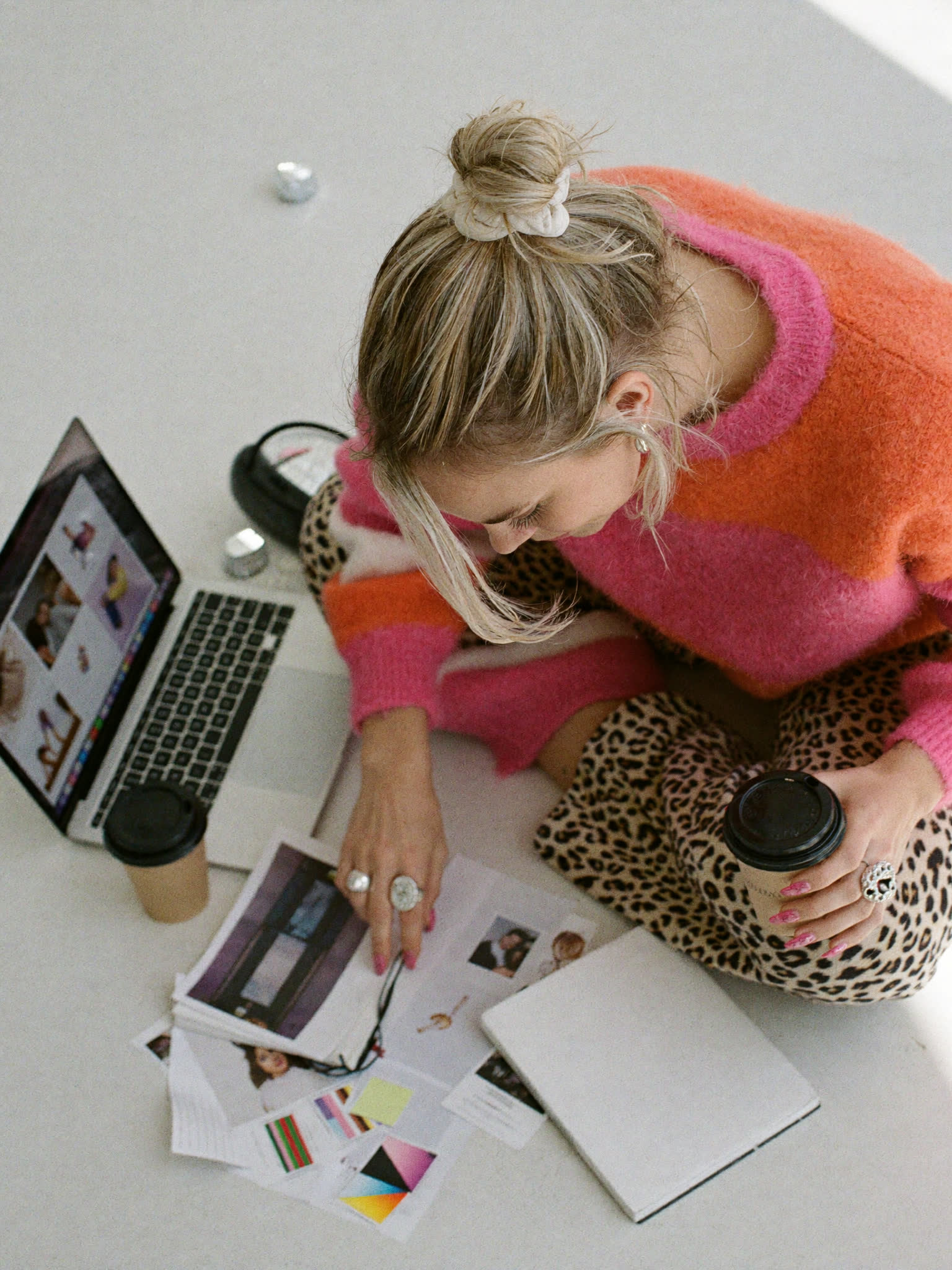
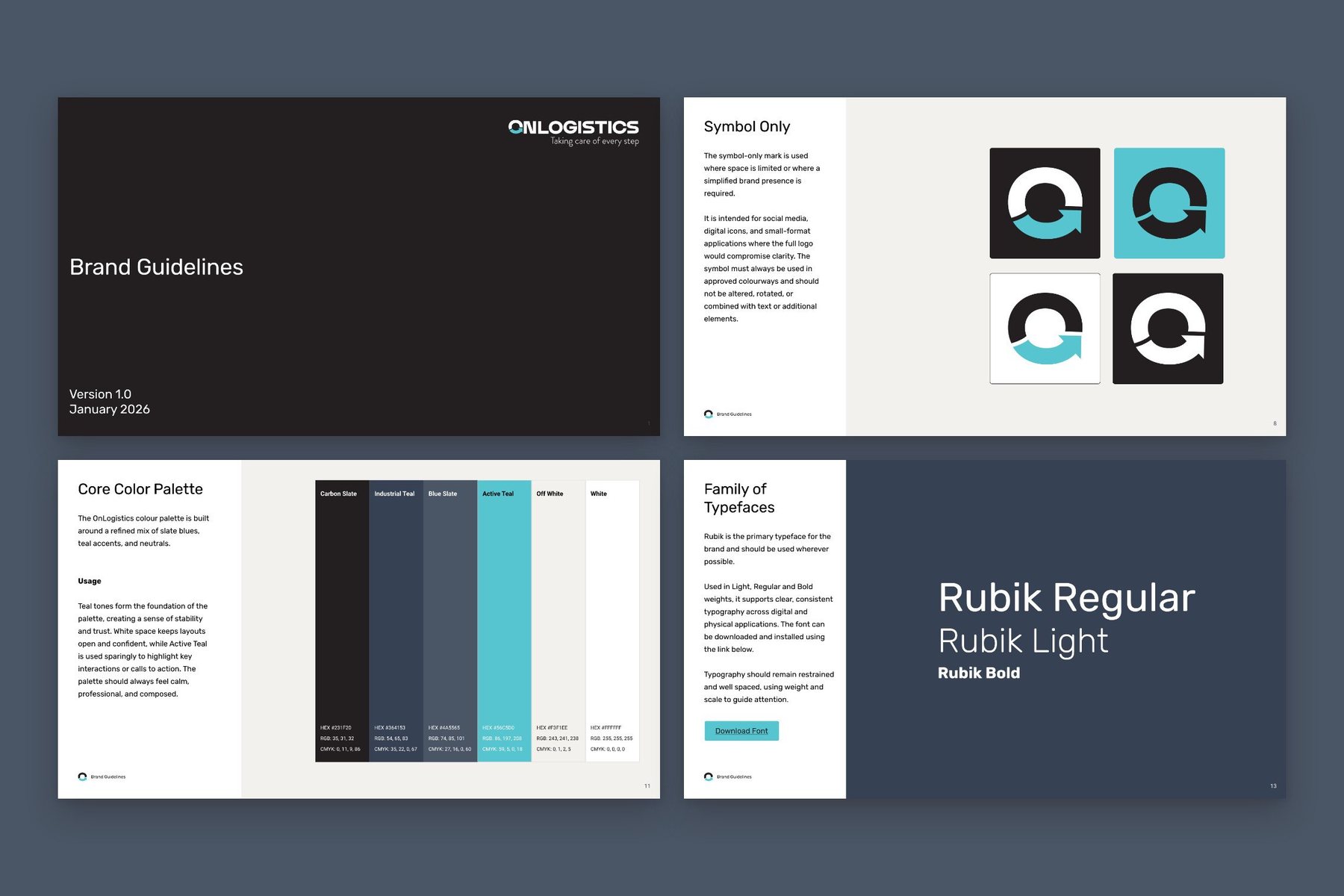
Yes. AI logos, mood boards and website mock-ups are one of the quickest ways to show a designer the feel you’re after, and I would always rather see them than not. Treat them as the starting point of the brief. A designer’s job is to work out what you like about them, then build something that works everywhere your brand appears.
Is it OK to bring AI visuals to a designer?
Yes, please do. I see more of them every month: logos made in a few minutes, colour palettes, mood boards, and full website mock-ups with every section laid out. Some are better than others, but every one of them is useful.
Words like modern, clean, premium or playful mean something different to everyone. A picture settles it in seconds. Never be afraid to bring me an AI visual. It tells me what kind of feel you’re after much faster than a written brief can.
Just don’t expect me to copy it exactly.
What does an AI visual tell a designer?
When a client sends me an AI mock-up, I’m not looking at it as a design to finish. I’m reading it for clues:
- The mood. Calm or loud, luxurious or down to earth.
- Colour and light. The palette you keep coming back to, even if the exact shades need work.
- How much is going on. Lots of space, or a page packed with detail.
- The type of lettering. Sharp and modern, or soft and rounded.
- What you have seen and liked. AI often pulls from styles that are popular right now, which shows me what has caught your eye.
The most useful part is the reason behind it. If you can tell me what you like about an image, even in one line, that is worth more than the image itself.
Bring me the picture. I’ll find the reason you like it.
Why won’t a designer copy it exactly?
Because an AI visual is made without knowing anything about your business. It can look finished and still be wrong for you. What it’s missing is good design taste, and the knowledge that sits behind it:
- Your customers. It doesn’t know who you’re selling to, what they trust or what puts them off.
- Your competitors. It doesn’t know what everyone else in your sector looks like, so it can’t set you apart from them. It often lands right in the middle.
- Everywhere your brand has to work. A mock-up is one picture. A real site and a real brand have to hold together on every page, on phones, on social posts and in print, for years.
- What will last. It reaches for what’s popular right now, which is often what dates first.
- Looking like someone else. AI learns from existing work, so it can produce something close to a mark that already belongs to another business.
- The AI look. Websites built start to finish by AI tools have some big tells: a purple or blue gradient, rows of rounded cards with soft shadows, a sparkle icon, features lined up with an icon each, and copy that promises to “elevate your journey”. People have started calling it AI slop, and your customers are getting good at spotting it. A site that looks like every other AI site gives them no reason to remember you. And don’t get me started on AI posters.
What does a designer add that AI can’t?
I have been designing since 2012, across every part of the process: the brief, the brand, the website, the launch and what happens after. That experience is what you are hiring.
- Good design taste. It matters more than anything else on this list. Taste is knowing which of a hundred finished-looking options is the right one for you, and it comes from years of making things for real businesses and seeing what works. AI can make something look polished in seconds. Taste decides whether it belongs to you.
- Judgement about your audience. What will your customers trust? What will look dated in two years? What does your sector expect, and where can you stand out?
- A whole system. A logo is where it starts, and the colours, type, layouts and rules that carry across your website, social posts, packaging and print are what make it a brand.
- An honest opinion. If I think a direction won’t work, I will tell you, and I will tell you why. That is part of the job.
How do you get the most out of AI visuals in a brief?
- Bring a few. Three to six images give a much clearer picture than a single perfect one.
- Add a line to each. “I like the colours”, “this feels too cold”, “the layout but not the font”. Short notes like these save a lot of guessing.
- Include what you don’t like. Knowing what to avoid narrows things down just as fast.
- Say where it will be used. A brand that lives mostly on Instagram needs different things from one that lives on a shop front.
- Hold the details loosely. Fall in love with the feel and let the exact shapes go. That leaves room for a version that works.
When you have a few together, send them over with your brief and I’ll tell you what I see in them.
Questions people also ask
Is it rude to send my designer AI images?
Not at all. Pictures explain a feeling far faster than words, and most designers would rather see what you have in your head than guess at it. Just don’t expect the finished work to be a copy.
Can I use an AI-generated logo for my business?
You can, but check three things first: that the tool’s terms allow commercial use, that it doesn’t look like an existing mark (search the UK trade mark register), and that you have it as a vector file you can resize. Then ask whether it says anything about your business. A logo anyone could have made won’t help people remember you.
Can a designer tidy up a logo I made with AI?
Sometimes. If the idea is strong, it can be redrawn properly as a vector, with the shapes and spacing refined so it works at every size. If the idea is weak, tidying it up just gives you a neater version of a weak idea, and a good designer will tell you so.
Does bringing AI visuals make a design project cheaper?
It can shorten the early direction stage, because we agree on a feel faster. The design, refining and building still take the same care, so don’t expect it to change the price much.
Sophie is an independent designer based in the UK and the founder of S Evans Design, working across brand, web and product for founders and brand teams. Her career work includes projects for Arsenal, DreamWorks, BBC, Sky, Channel 4, Barclays and the NHS, and she is a Squarespace Circle Gold partner. More about Sophie.