
Case study · 2026
Sirens Netball Club
Brand identity, website design and a social media launch pack for a new junior netball club in Sidcup, live four weeks before its first session.
Sirens Netball Club is a junior netball club in Sidcup, south east London. It began as a hall booking at Sidcup Leisure Centre, a first session pencilled for Wednesday 16 September, and England Netball affiliation coming through. Everything a parent would ever see was still to be made: the badge, the colours, the photography, the website, the launch.
Two things had to be true before that first session. A parent who had never heard of Sirens had to take it seriously, and anyone interested had to be able to book a place in a couple of minutes without phoning a stranger. That is the whole job of a small sports club website.
A netball with a wave running through it, four-point sparkles for the junior age group, the whole thing held in a circle. It behaves like a crest: one badge for a bib, a banner, a poster and a browser tab, in full colour on navy or cut to a single colour for embroidery. Deep navy carries it, with the palette running teal through to magenta underneath.
Whatever the club is making, there is a version of the badge that fits it. The full seal for kit and banners, a horizontal lockup for the top of a page, a white version for navy grounds, and single-colour cuts for the embroiderer or the printer who asks for one. Nobody has to crop, stretch or recolour anything to make it work.
The rest of the kit works the same way: two typefaces, the palette, a wave device, icons and four value badges for teamwork, confidence, respect and enjoyment, written up as guidelines. A poster on a noticeboard and a post on a phone read as the same club.
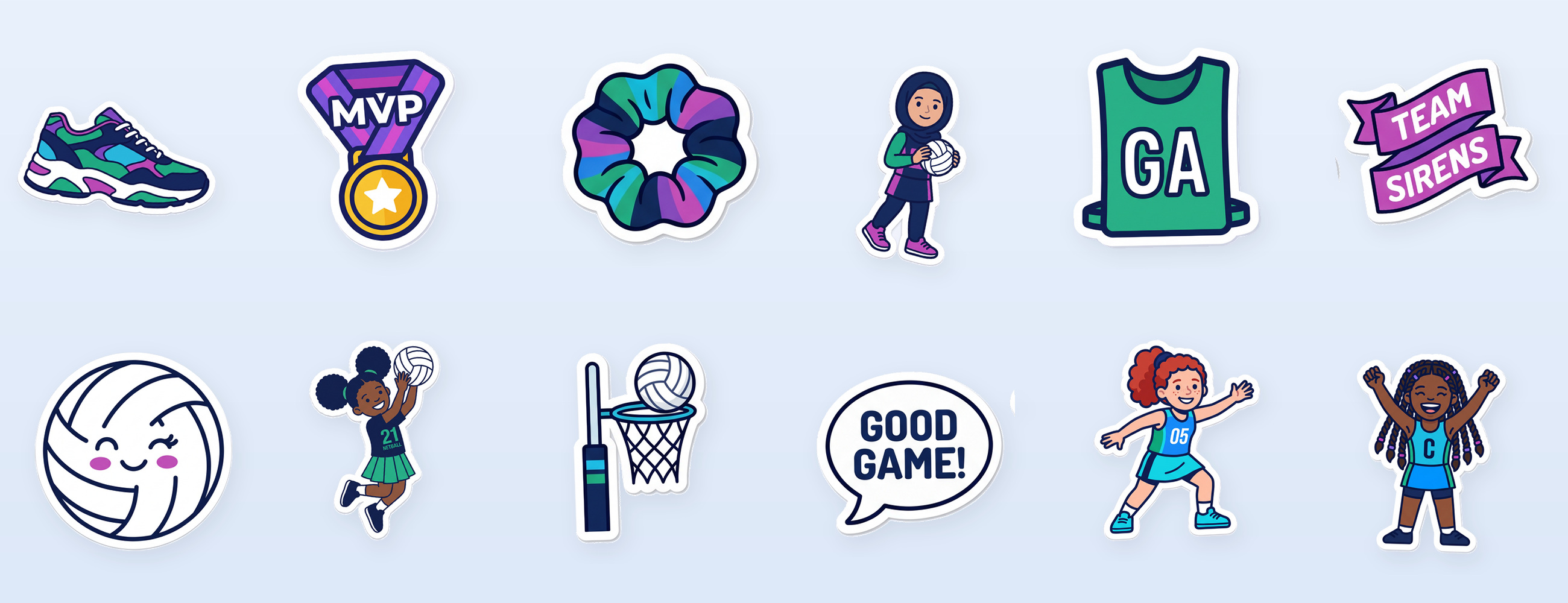
A crest earns trust with parents. It does not do much for a nine year old. So the identity has a second layer aimed at the players: a set of illustrated die-cut stickers that drop onto a poster, a post, a kit bag or a water bottle.
It lets the brand be two things at once. The badge stays formal where it has to be, the stickers carry the fun, and the club reads as somewhere a kid actually wants to turn up.
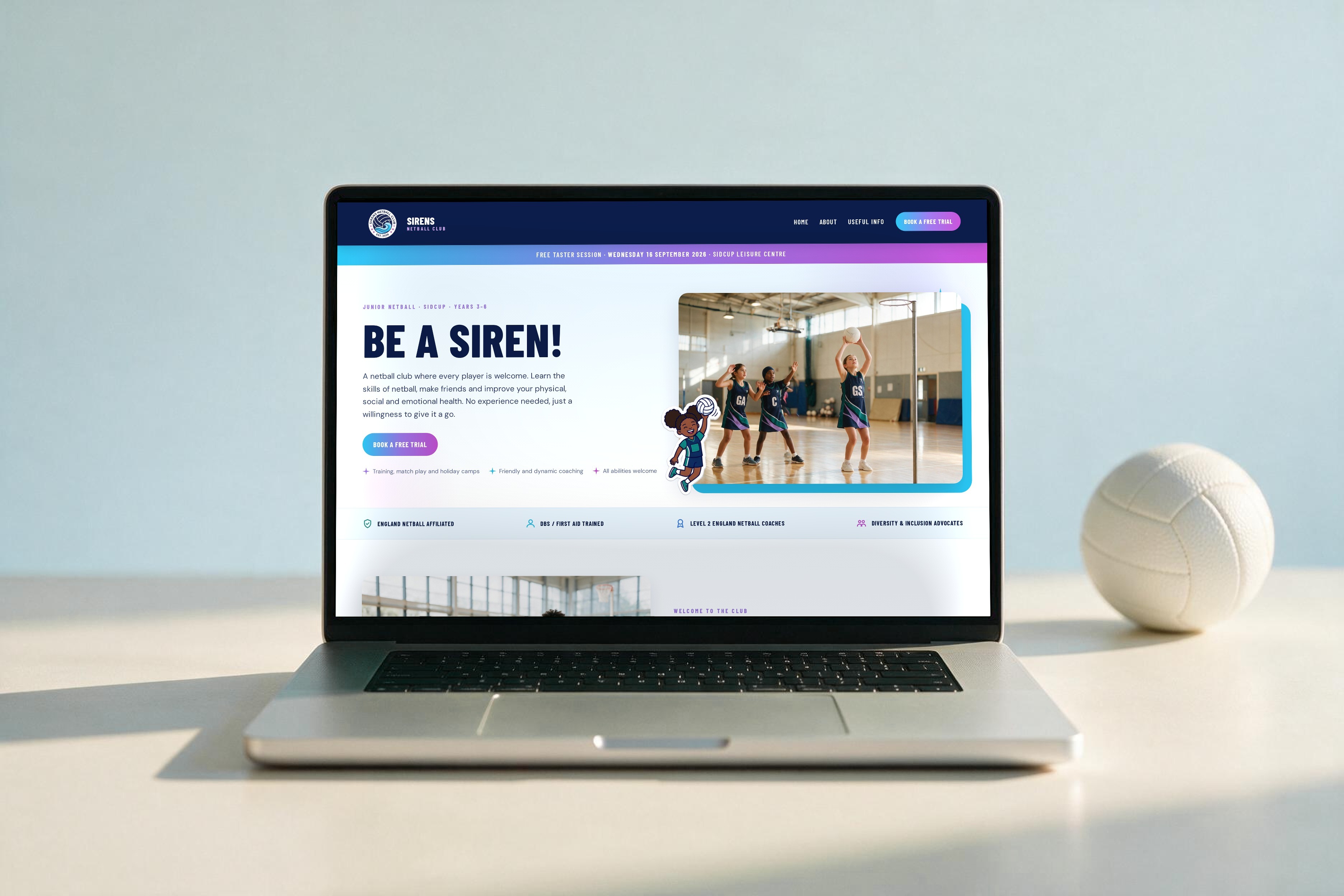
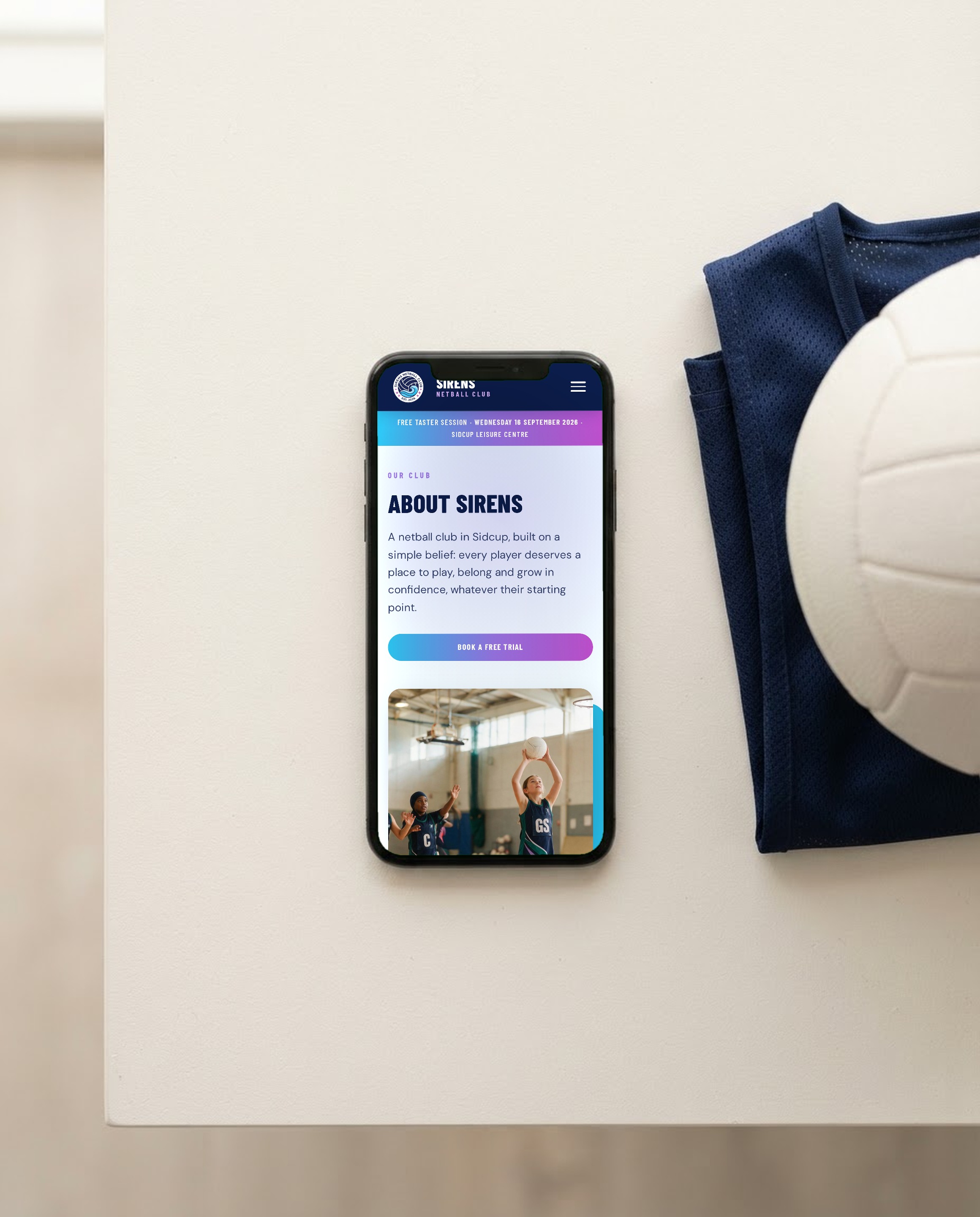
sirens-netball.com. A small sports club website in four pages, built for phones first: home, about the club, the practical information parents ask for, and booking. A parent can read what the club is about, check that it is safe, and book a free trial without picking up the phone. Every booking and enquiry arrives with a note of where the family heard about the club, so Lucy can see what is actually working.
Who runs it, is it safe, where is it, what does it cost, what do we bring. The page answers those in that order, and the reassurance comes early: England Netball affiliation, DBS and first aid, Level 2 coaching. There is only ever one thing being asked of a parent, and it is the free taster.
Lucy wrote the welcome, the manifesto and the pathway. Those went in verbatim.
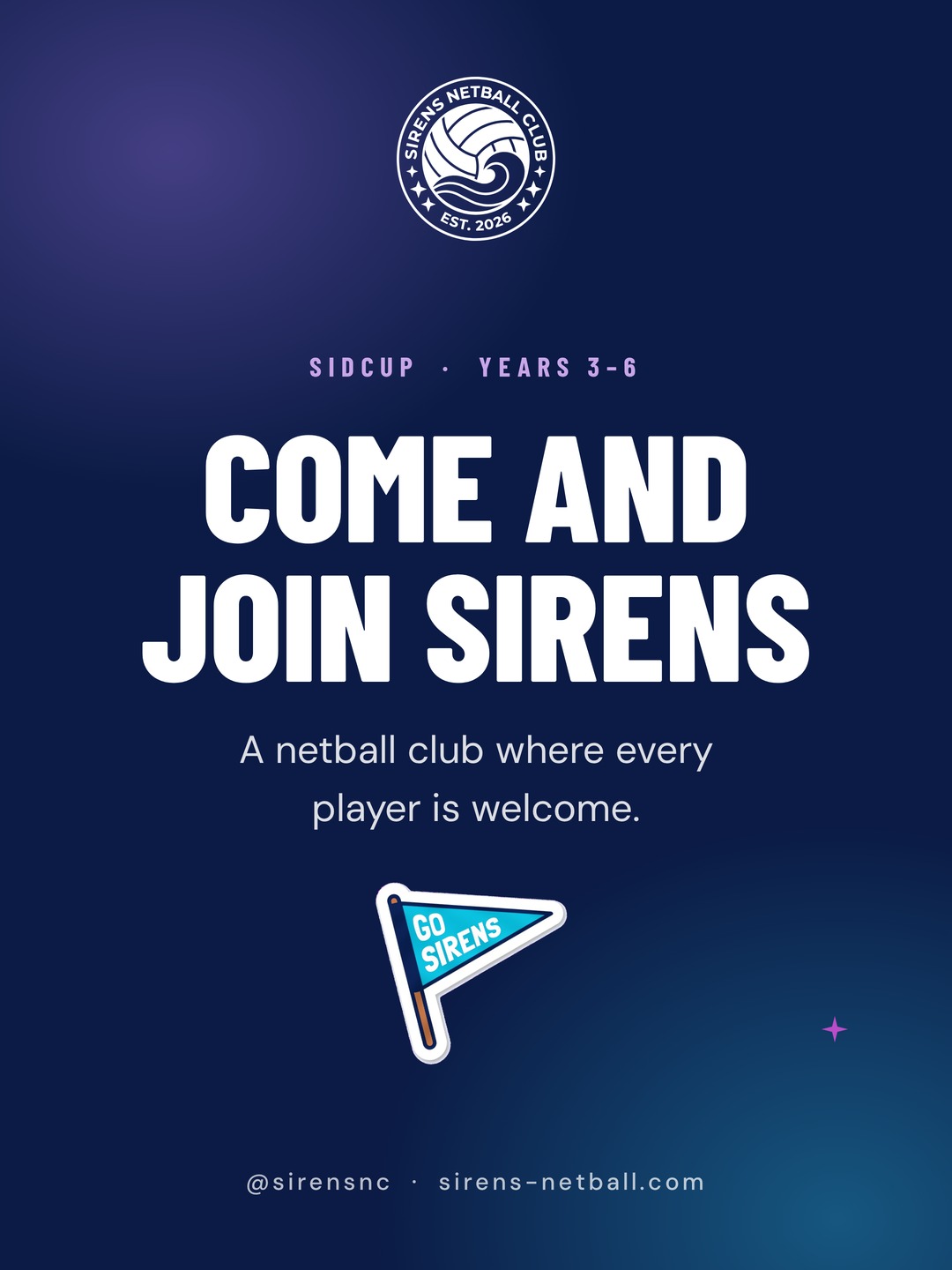
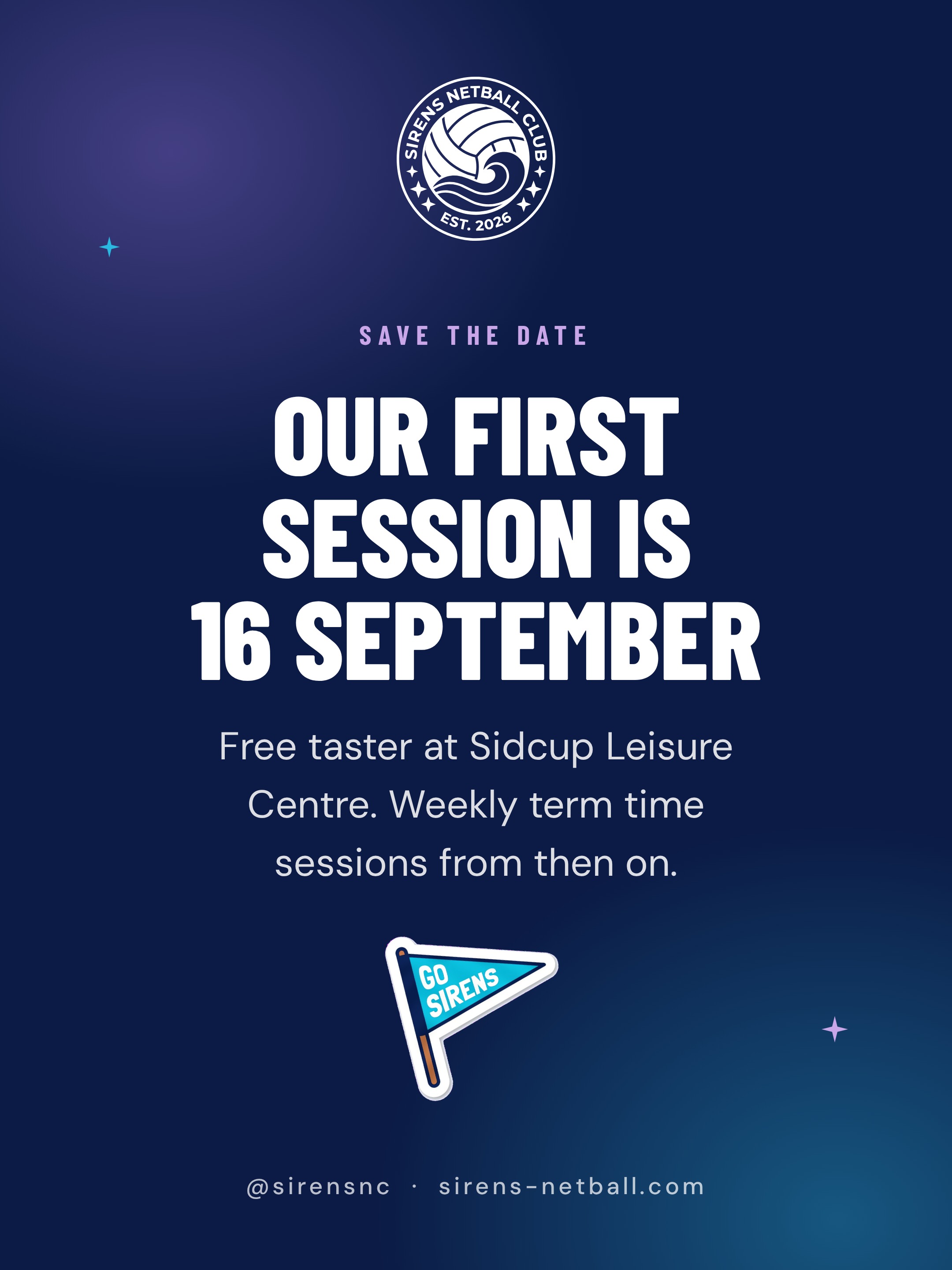
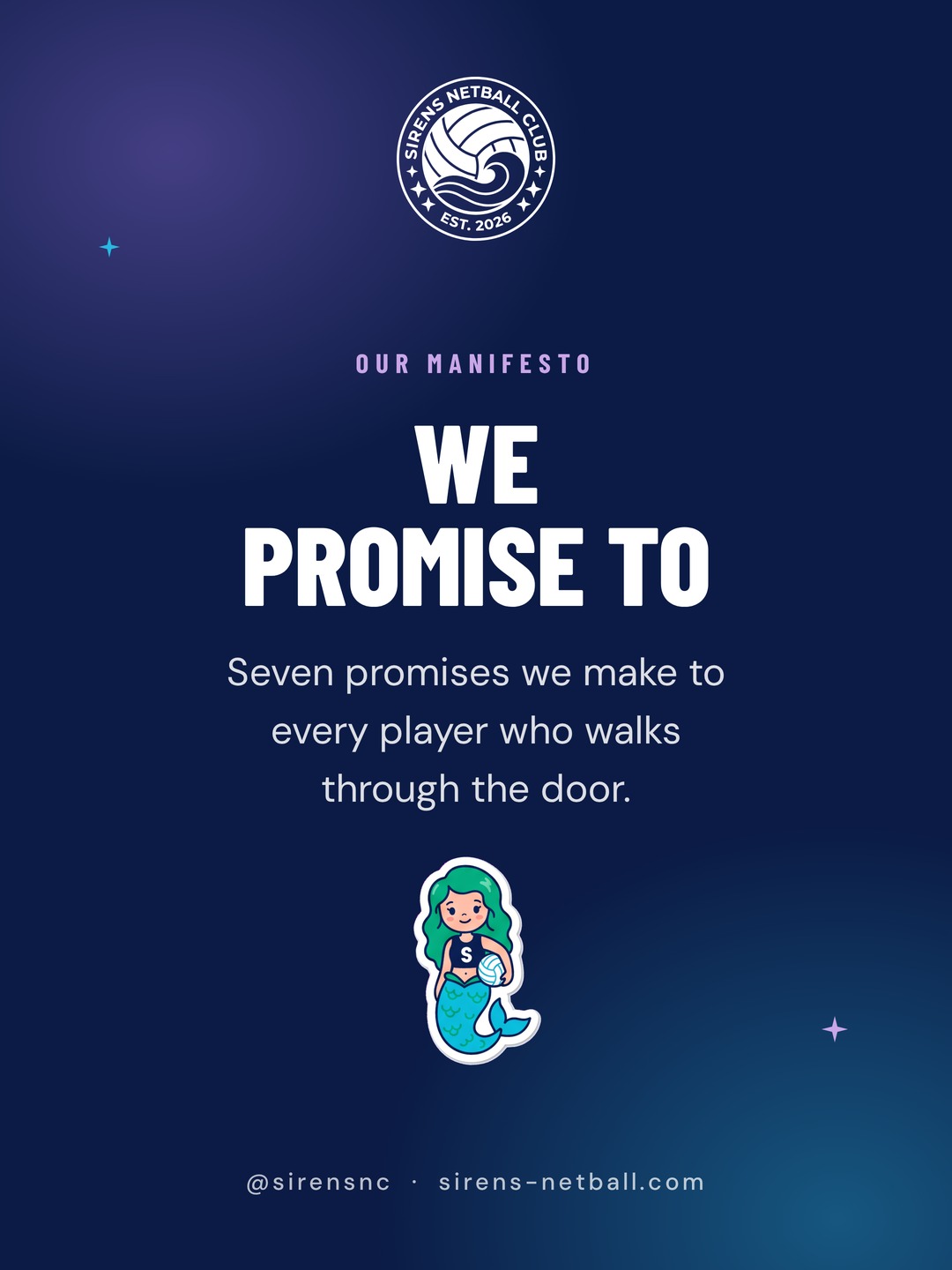
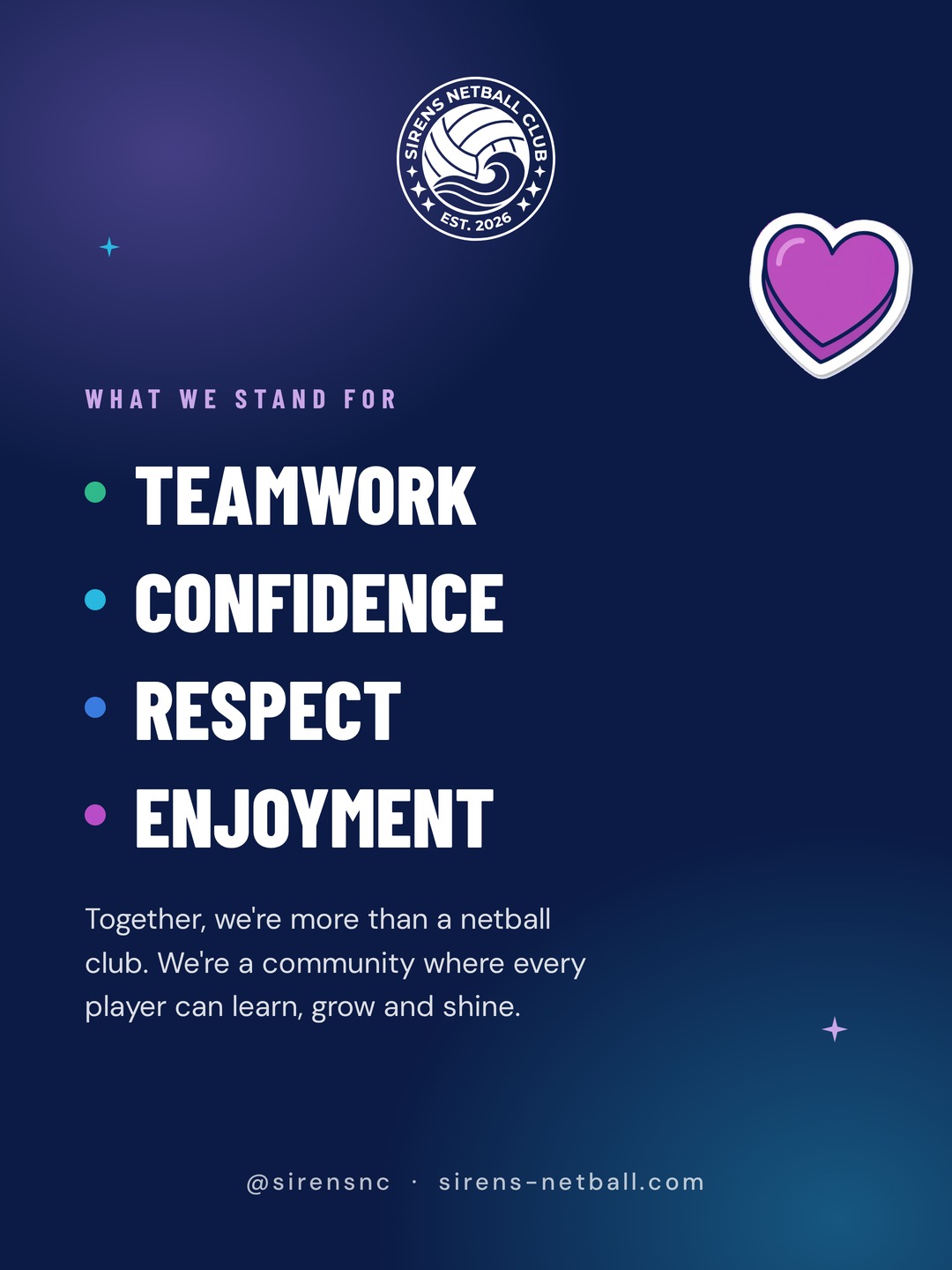
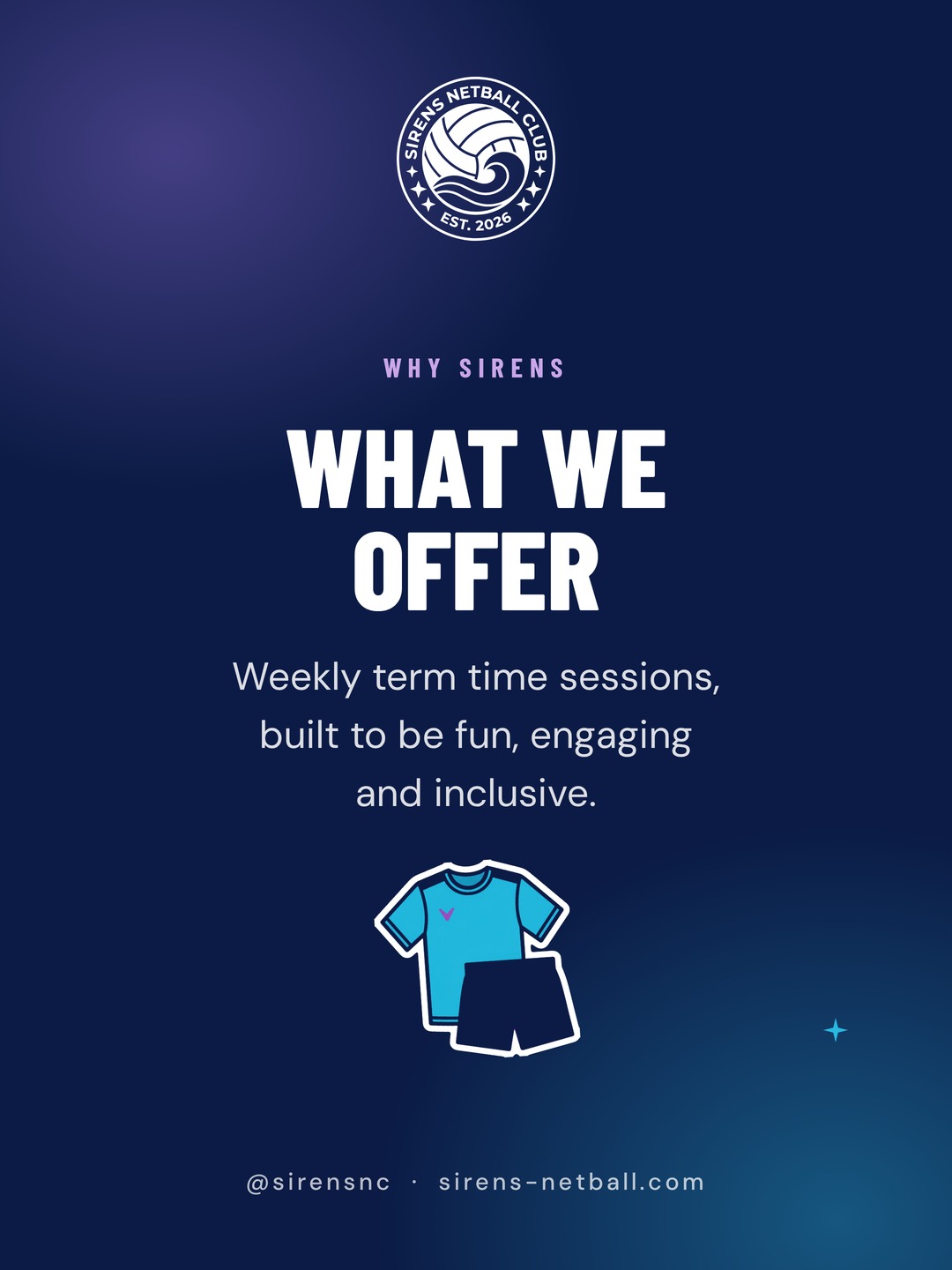
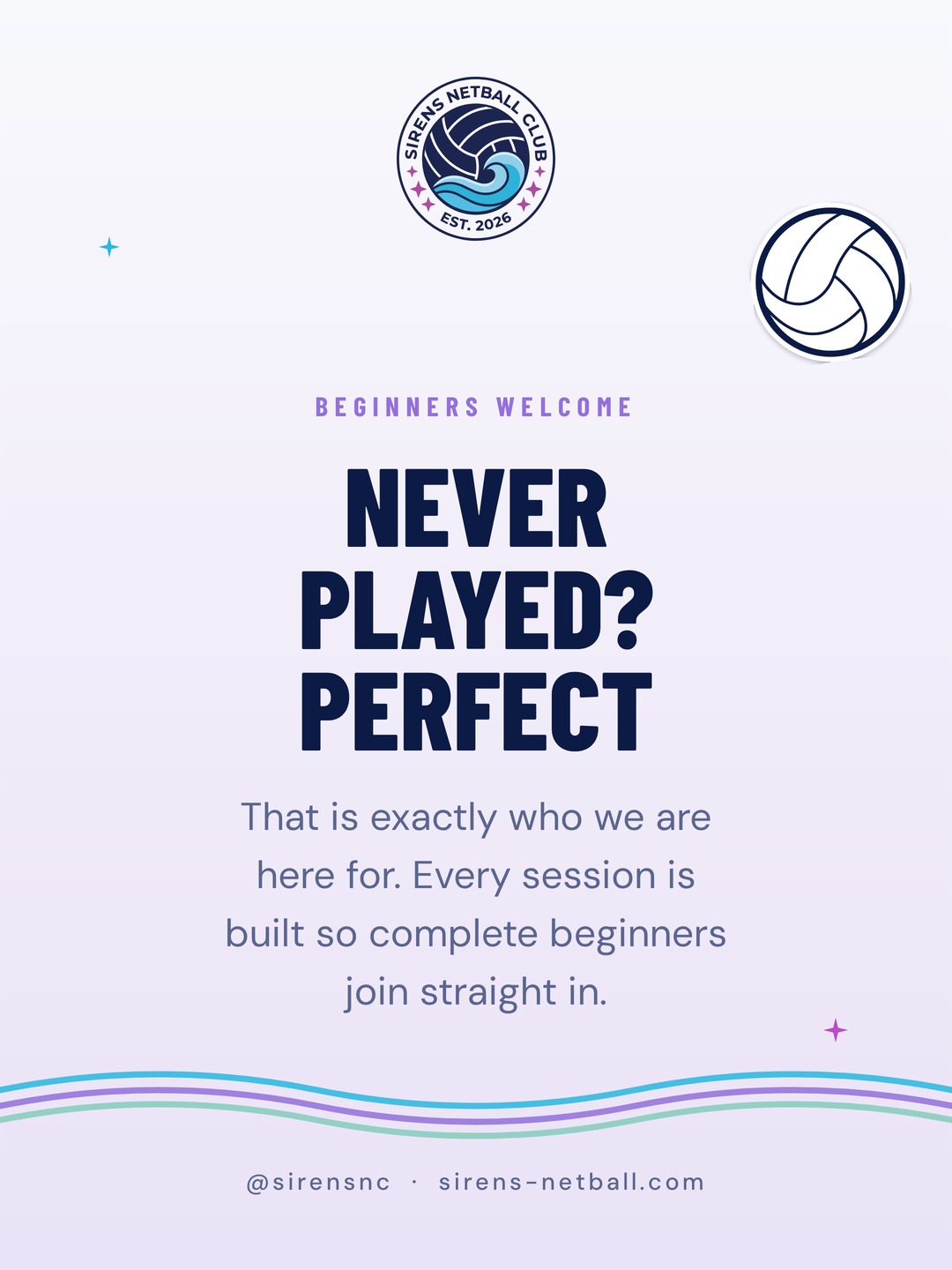
A new club is one person doing everything, usually late at night. So the social pack is finished artwork rather than templates: sixty-one posts ready to go, story frames, highlight covers and captions to match, in numbered folders in the order they should be used. Lucy can post through the whole launch without making a single design decision.
There is an editable kit alongside it for the things nobody can plan for. Logos, backgrounds, word art, the stickers and the fonts, so the club can put its own post together and still look like itself.
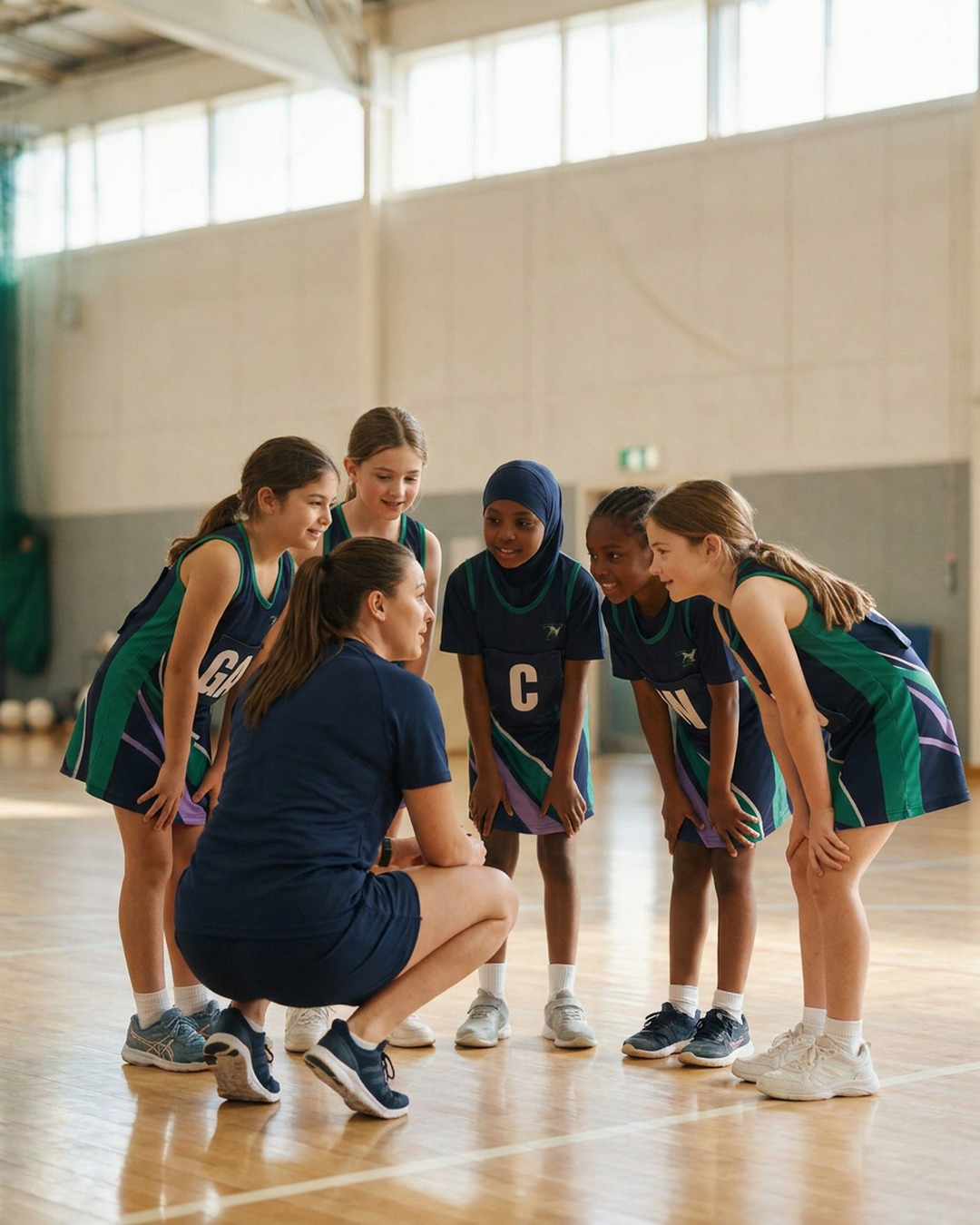
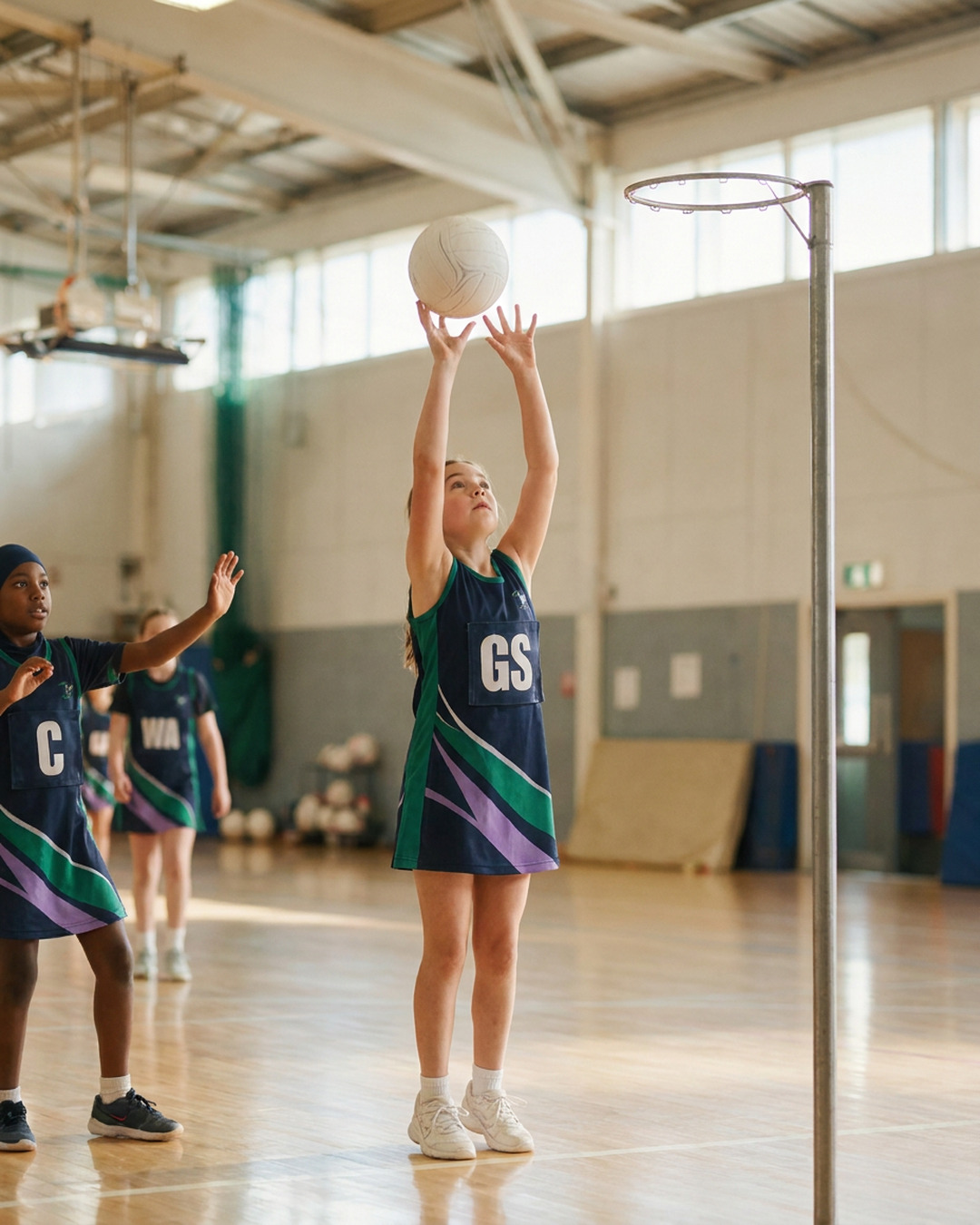
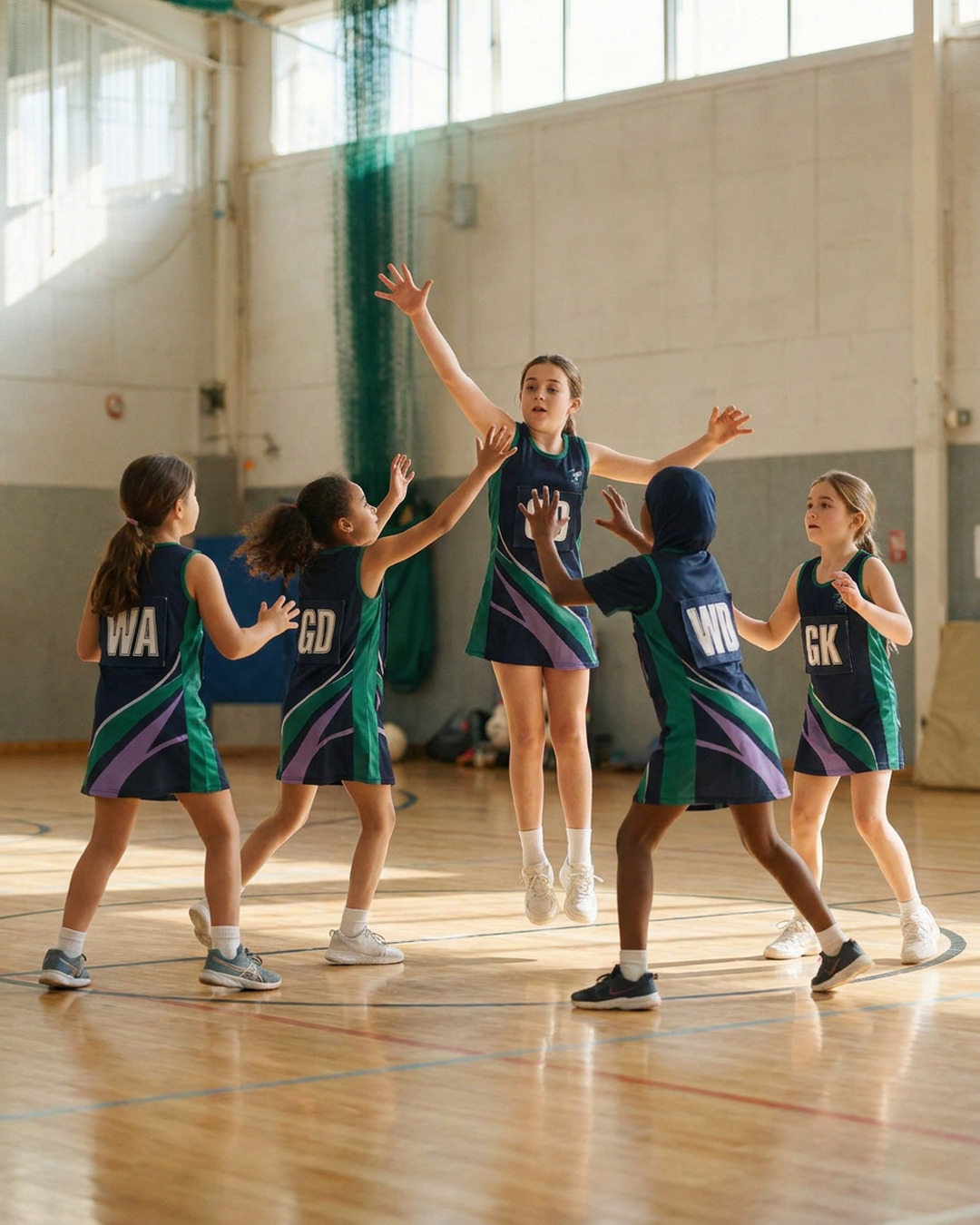
The site went live on 12 August, four weeks ahead of the taster, taking bookings and enquiries from day one. The badge is on the kit, the posters and the door. The launch pack means the club posts on a schedule instead of when someone remembers. Most small sports clubs need the same three things: a badge that works everywhere, a website that takes bookings, and enough content to keep posting.
I came to Sophie with a hall booking and a date. She asked the questions I didn't know to ask, made the calls I couldn't, and had the whole club ready four weeks before our first session.Lucy Bunn, founder and head coach, Sirens Netball Club