Usually, yes. When the identity and the website are made at the same time, the brand is designed for the place most people will meet it, decisions are made once, and the two agree with each other. Do them separately when a strong brand already exists, or when you need a site live before the brand can be finished.
Why do brand and website work better together?
For most small businesses, the website is where the brand does most of its work. It is the first thing a potential client checks, the thing they send to a colleague, the place they decide whether to get in touch. A brand made without the website in view is designed for everywhere except the place that matters most.
Made together, three things change:
- The identity is tested on real pages as it is made. A logo that looked right on a presentation board gets checked in a browser tab, a navigation bar and on a phone before it is signed off.
- Decisions are made once. Type, colour, image direction and tone of voice are chosen with the website layouts in mind, rather than reinterpreted later by someone else.
- There is one brief and one timeline. You explain the business once, and nothing waits for a handover between two suppliers.
What does it look like on a real project?
Fortiter is an independent legal consultancy that needed to read as established from its first day. The mark, the palette, the guidelines, the collateral and a Squarespace website were made as one piece of work. It went from first sketches to a live brand and website in under two months.
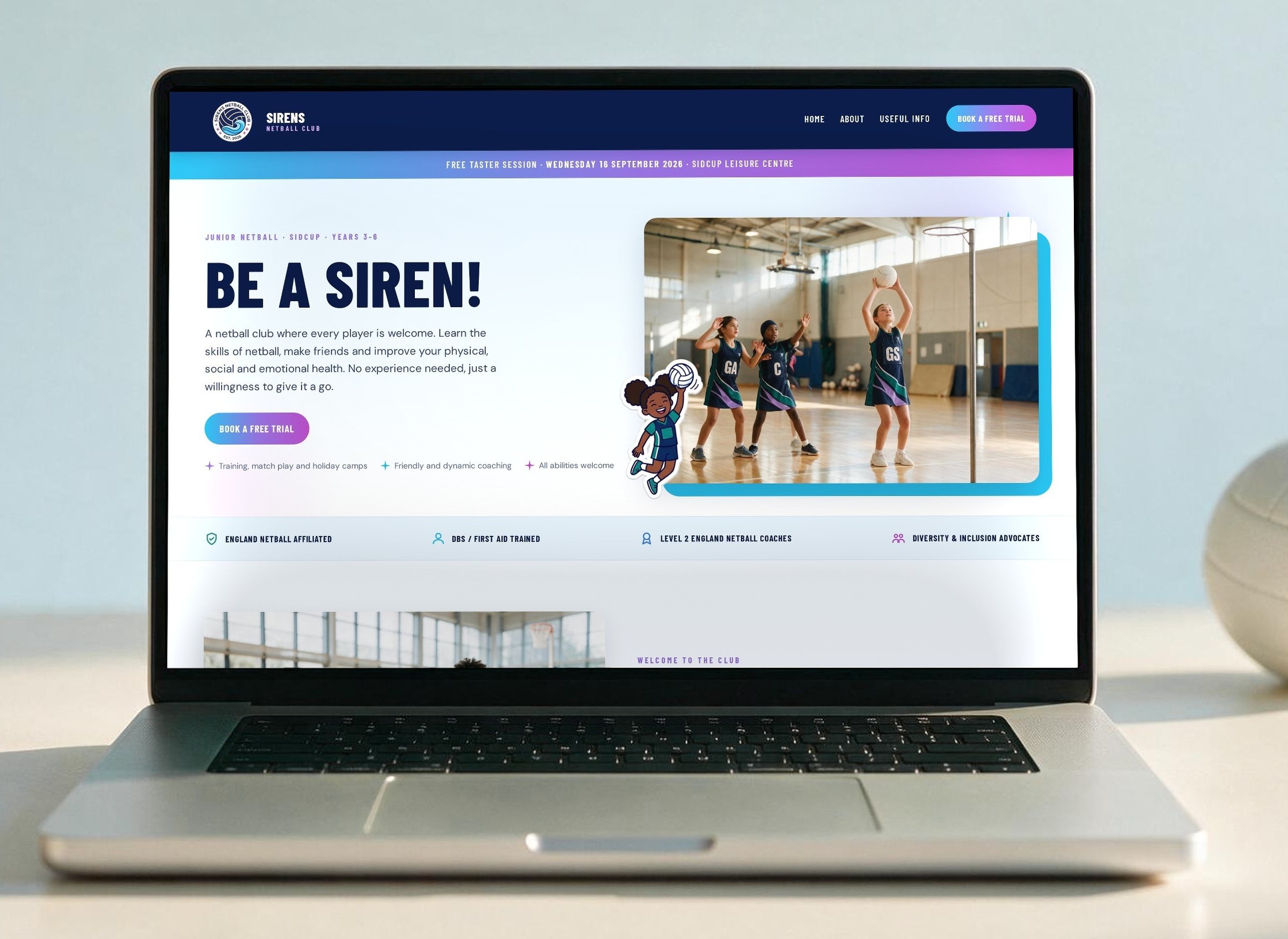
Sirens Netball Club started as a hall booking and a date in the diary. The badge, the colours, the website and a social launch pack were all made together, and the club was live four weeks before its first session. There was no time to do them one after the other, and no need to.
A brand made without the website in view is designed for everywhere except the place that matters most.
When should you do them separately?
Doing them together is the default, not a rule. Split them when:
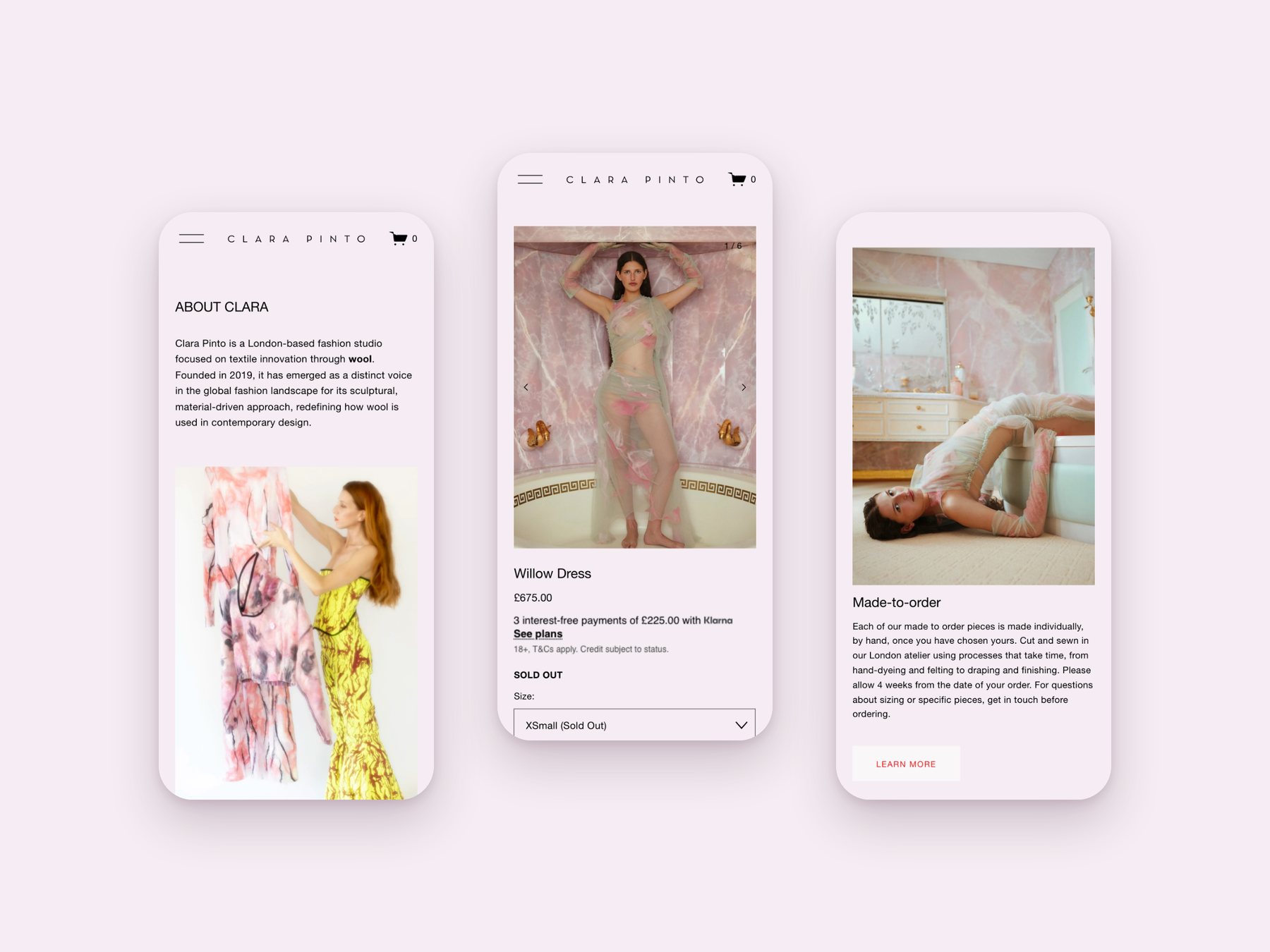
- The brand already exists and works. Stems came to me with a finished identity and packaging by another designer. The job was a Shopify store that carried that brand, so there was nothing to redesign.
- You need something live now. A simple holding page can go up while the brand is made, then be replaced by the full site.
- The business is not settled yet. If the name or the offer might still change, work that out first. Strategy and direction is the step before either.
In what order does the work happen?
- Positioning. What the business is, who it is for and what it needs to say.
- Identity. The mark, type, colour and image direction, tested on website layouts as they develop.
- Site structure. The pages, and what each one has to do.
- Page design. The identity applied to real content, desktop and mobile.
- Build and launch. The site built, tested and handed over, with the brand files and guidelines alongside.
The steps overlap more than a list suggests. That overlap is the point.
What should you prepare before you start?
- A few sentences on what the business does and who it is for
- Any existing logo or materials, even if you want to replace them
- Two or three brands you admire, in any sector, and why
- A rough list of the pages you think the site needs
- Your launch date, and whether it is fixed
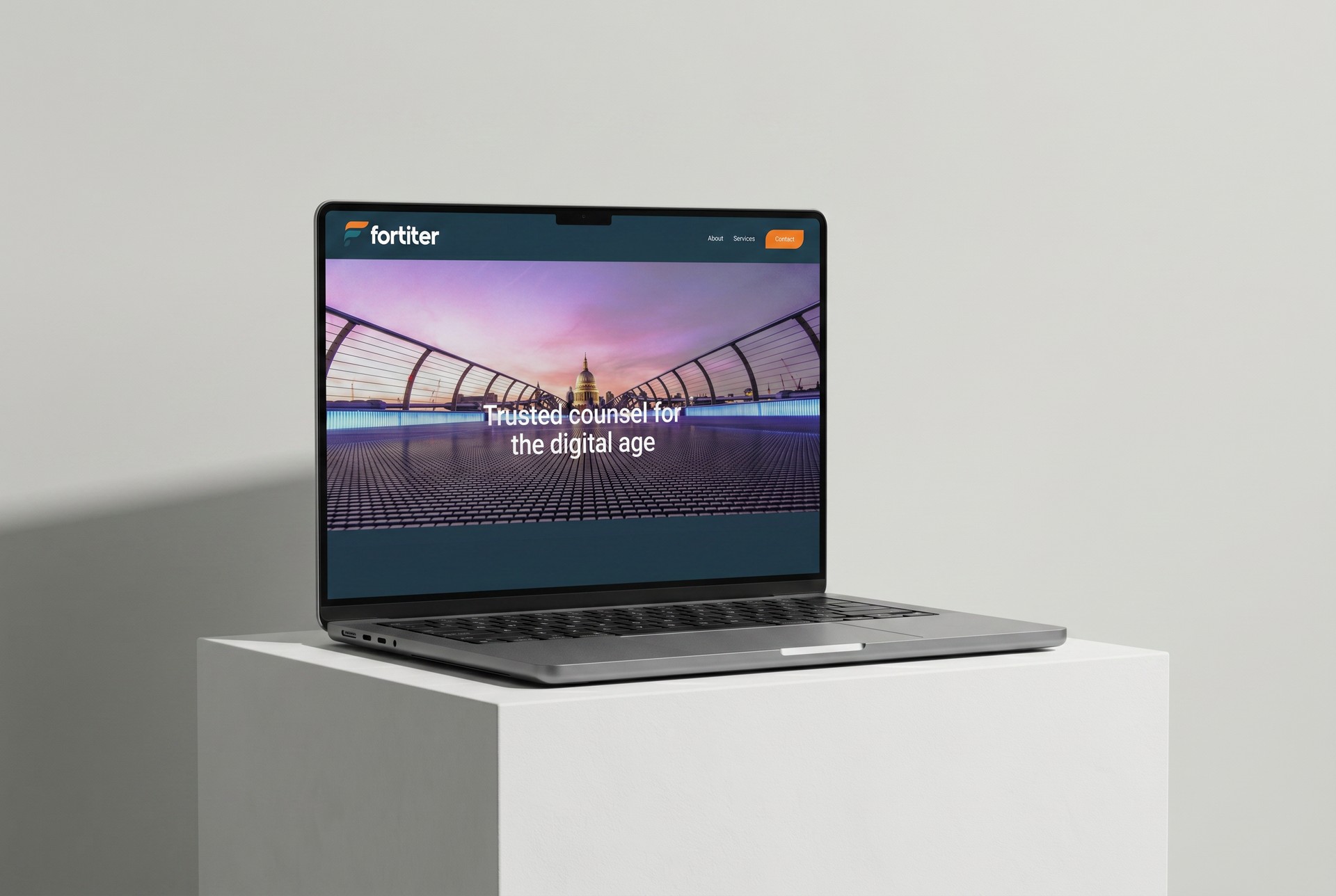 From the workFortiterBrand identity and a Squarespace website for an independent legal consultancy, live in under two months.
Questions people also ask
How long does a brand and website take together?
In my projects, six to eight weeks or more. The brand has to exist before the site can be built around it, so it takes longer than a website on its own.
Can you keep my existing logo?
Often, yes. If people already recognise the mark, a refresh can tidy it and build the missing system around it, then carry that straight into the website.
Can another developer build the site from the designs?
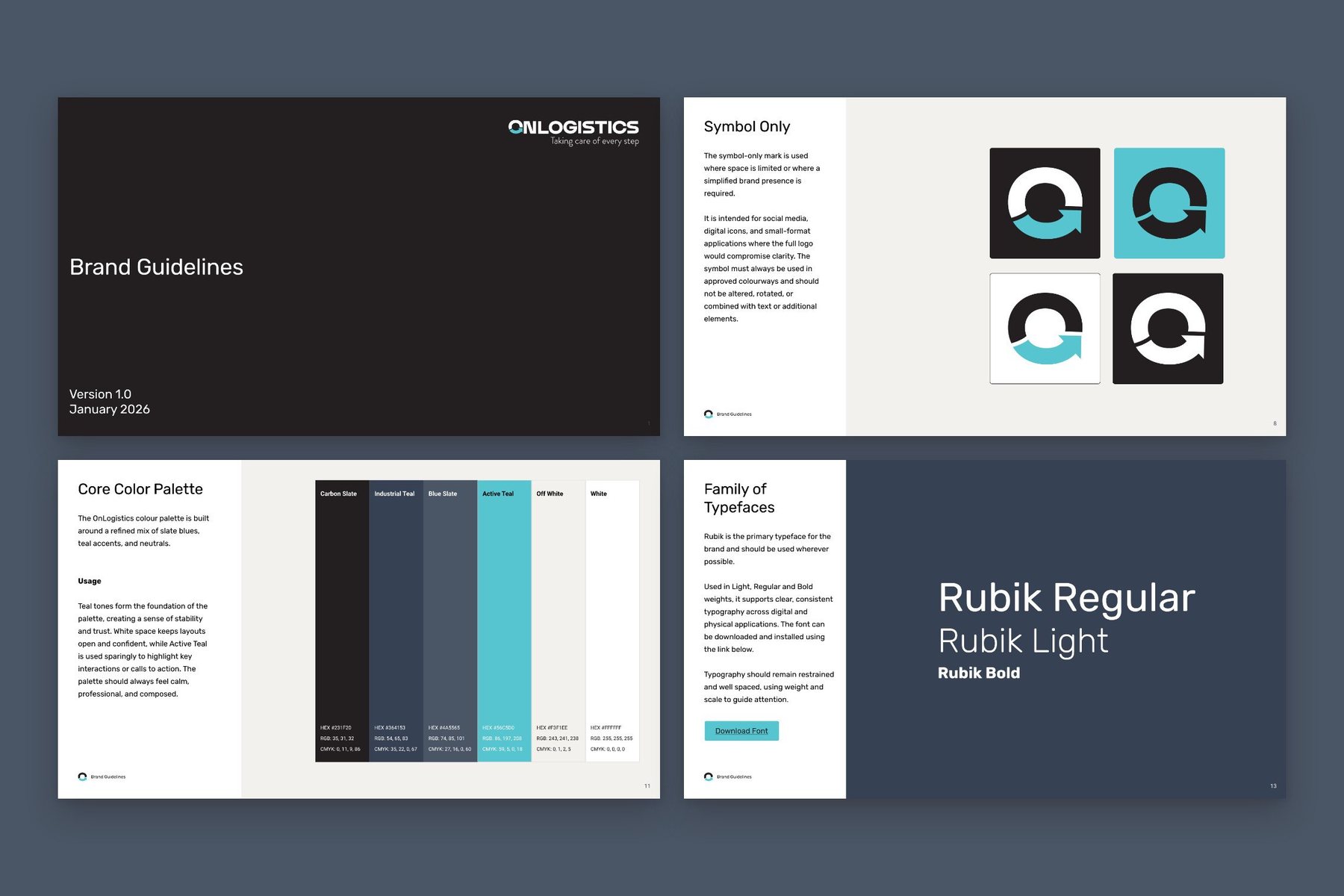
Yes. On OnLogistics I designed the brand and the website, and a development partner built the site in WordPress from the designs.
Is it one quote or two?
One. When the brand and the website are made together, they are scoped and quoted as a single project.

Sophie is an independent designer based in the UK and the founder of S Evans Design, working across brand, web and product for founders and brand teams. Her career work includes projects for Arsenal, DreamWorks, BBC, Sky, Channel 4, Barclays and the NHS, and she is a Squarespace Circle Gold partner. More about Sophie.